Embracing Peace: A Practical Guide to the Bible Pray More Worry Less Christian Lifestyle
In a world that often feels chaotic and unpredictable, finding a steady anchor for the soul is not just a spiritual desire but a practical necessity for mental and emotional well-being. The Bible Pray More Worry Less Christian philosophy offers a transformative approach to daily living, shifting the focus from anxiety-ridden speculation to faith-filled action. This concept is more than a catchy phrase; it is a actionable framework rooted in Scripture that encourages believers to replace the burden of worry with the power of prayer. Whether you are facing financial uncertainty, health challenges, or relational strain, adopting this mindset can fundamentally alter how you navigate life's storms.
Understanding the Core of Faith Over Fear
At its heart, the Bible Pray More Worry Less Christian message is a call to realign our priorities. It addresses a universal human struggle: the tendency to catastrophize future events rather than trusting in divine providence. The Bible is replete with exhortations to cast our cares upon the Lord, yet in practice, many Christians find themselves trapped in cycles of overthinking and fear. This design and lifestyle choice serve as a constant visual and mental reminder to pause, breathe, and pivot toward prayer.
The challenge for many adults today is not a lack of faith, but a lack of consistent application during high-stress moments. When deadlines loom or bad news arrives, the instinctive reaction is often panic. The goal of embracing this Christian principle is to retrain that reflex. By intentionally choosing to pray more, individuals create a spiritual buffer against worry. This does not mean ignoring problems or neglecting practical planning; rather, it means approaching those problems with a spirit of peace rather than paralysis.
Practical Applications for Daily Life
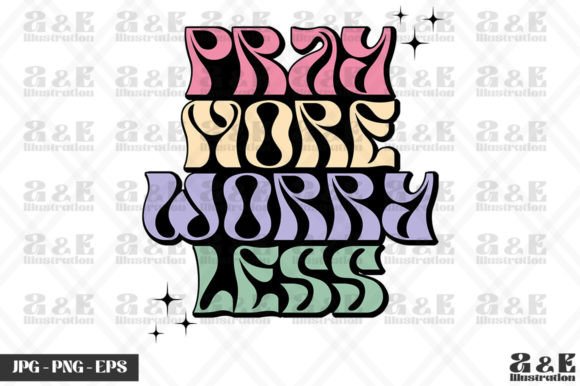
Implementing the Bible Pray More Worry Less Christian ethos requires more than good intentions; it demands practical strategies that fit into a busy schedule. One effective method is the use of visual cues in your personal environment. For many, integrating this message into their home decor or workspace serves as a tangible prompt. Imagine having a high-quality graphic display in your office or kitchen that instantly redirects your thoughts when stress begins to mount. These visual reminders act as spiritual stop signs, halting the spiral of anxiety before it gains momentum.
For those who appreciate digital organization or print media, utilizing resources like PNG files with transparent backgrounds allows for seamless integration into digital planners, phone wallpapers, or church bulletins. The versatility of having files in various formats, such as JPEGs with solid backgrounds for printing on mugs or t-shirts, ensures that the message travels with you throughout your day. When you see the phrase "Pray More Worry Less" on your coffee cup during a morning rush, it reinforces the commitment to start the day with prayer rather than panic.
Another practical application involves structured prayer times specifically dedicated to releasing worries. Instead of vague requests, this approach encourages believers to list specific anxieties and systematically hand them over to God in prayer. This turns abstract fear into concrete items that can be addressed spiritually. Over time, this practice builds a reservoir of peace, making it easier to remain calm when new challenges arise.
Tailoring the Approach to Different Needs
Different users will approach the Bible Pray More Worry Less Christian concept based on their unique life stages and struggles. For young professionals navigating career instability, the focus might be on trusting God with their future and avoiding the trap of comparing their progress to others. For parents concerned about their children's safety and future, the application may involve dedicating specific times of intercession rather than losing sleep over hypothetical scenarios.
Sensorily, some individuals respond best to tactile or visual reinforcements. This is where the utility of high-resolution design files becomes significant. A user might choose to print a 300 DPI JPEG on canvas to hang in a meditation corner, creating a dedicated space for decompression. Others might prefer the clean look of a PDF with alpha channels for overlaying onto personal devotionals or presentation slides within a small group setting. The key is customization; the medium should support the message without becoming a distraction.
Furthermore, community leaders and ministry organizers can utilize these designs to foster a culture of peace within their congregations. By incorporating these graphics into sermon series, social media campaigns, or welcome packets, they normalize the conversation around mental health and spiritual reliance. This collective reinforcement helps individuals feel less isolated in their struggles and more supported in their journey toward a worry-free life.
Overcoming Barriers to Implementation
Despite the clear benefits, barriers often prevent people from fully embracing this lifestyle. Skepticism about whether prayer actually changes circumstances can hinder commitment. It is important to understand that the primary outcome of praying more is not always the immediate removal of the problem, but the transformation of the person facing the problem. The peace that surpasses all understanding acts as a guard over hearts and minds, providing the clarity needed to make wise decisions amidst chaos.
Another barrier is the misconception that praying more requires hours of secluded silence. In reality, the Bible Pray More Worry Less Christian model advocates for continual communion. Short, frequent prayers throughout the day—often called "breath prayers"—can be just as effective as long sessions. These micro-moments of connection keep the heart aligned with God's will and prevent worry from taking root.
Long-Term Outcomes and Spiritual Growth
The long-term impact of consistently choosing prayer over worry is profound. Individuals who adopt this mindset often report improved sleep, better relationships, and increased productivity. When energy is no longer drained by fretting, it can be redirected toward constructive actions and loving service. Spiritually, this discipline deepens one's relationship with God, fostering a trust that withstands even the most severe trials.
Moreover, this approach cultivates resilience. Life will inevitably bring difficulties, but the response to those difficulties defines the quality of one's life. By anchoring oneself in the promise that God is sovereign and caring, the believer develops a stability that the world cannot shake. This resilience becomes a testimony to others, drawing them toward the source of such enduring peace.
Making the Choice Today
Adopting the Bible Pray More Worry Less Christian lifestyle is a decision to live differently. It is a choice to value spiritual peace above worldly control. Whether through the strategic use of inspiring visuals in your home or the disciplined habit of turning every worry into a prayer, the path forward is clear. The resources available, from high-quality graphic designs to scriptural meditations, are tools designed to assist in this journey. They are not magic solutions, but they are powerful aids in keeping the focus where it belongs: on faith.
As you move forward, consider how you can integrate this philosophy into your immediate surroundings. Evaluate your current stress triggers and identify where a reminder to pray could interrupt the cycle of worry. Remember that the goal is progress, not perfection. Each time you choose prayer over panic, you strengthen your spiritual muscles and draw closer to the peace that God intends for you. Let this principle guide your steps, inform your decisions, and ultimately define your days with hope and tranquility.