Even Jesus Has a Fish Story: A Playful Typeface for Editorial Design
There is a specific moment in every editorial redesign project where the layout feels technically correct but emotionally flat. I recently found myself in this exact position while refreshing the visual identity for a lifestyle blog dedicated to slow living and community stories. The grid was solid, the white space was generous, and the body copy was legible, yet the publication lacked a soul. It needed a voice that felt human, slightly imperfect, and warmly inviting. That is when I turned to Even Jesus Has a Fish Story. While often categorized under T-Shirt Designs and Graphics for merchandise, this design asset possesses a unique typographic rhythm that translates beautifully into editorial contexts, offering a bridge between whimsical illustration and functional lettering.
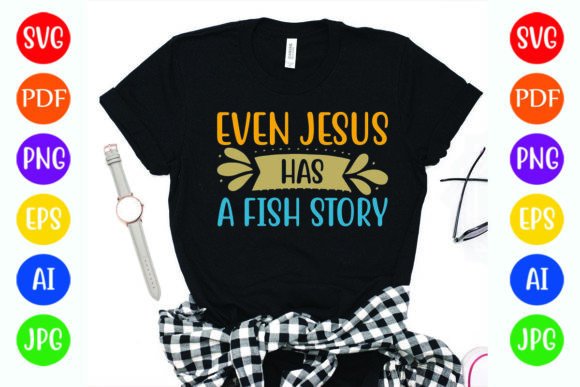
The initial encounter with Even Jesus Has a Fish Story feels less like selecting a standard font and more like discovering a hand-drawn narrative element. The visual character is defined by its organic flow and playful curvature, reminiscent of vintage signage or hand-painted market banners. Unlike rigid geometric sans serifs or traditional serif fonts that demand formality, this typeface invites the reader in with a sense of humor and approachability. When I placed it as the masthead for the blog's "Community Tales" section, the mood shifted instantly. The letters carry a bounce and a weight that suggests storytelling rather than just information delivery. It creates an immediate emotional connection, signaling to the audience that the content within is personal, curated, and crafted with care.
Building Visual Hierarchy with Character
In editorial design, establishing a clear visual hierarchy is paramount, but it does not always require stark contrast in weight or size alone; sometimes, it requires a shift in personality. Even Jesus Has a Fish Story excels as a display font, perfect for capturing attention in blog headers, magazine covers, and ebook titles. Because of its distinct style, it naturally draws the eye, making it ideal for chapter openers or pull quotes that need to break up long-form text. However, its utility goes beyond mere decoration. When used strategically, it anchors the reader's journey through a digital magazine or a coaching workbook, providing memorable landmarks in the layout.
For instance, while designing a printable planner for a creative course, I utilized this graphic for the cover title and major section dividers. The result was a document that felt less like a corporate worksheet and more like a cherished journal. The font's inherent charm encourages engagement, making the user more likely to interact with the material. It is important to note, however, that due to its decorative nature, Even Jesus Has a Fish Story is best reserved for short bursts of text. It shines in titles, subtitles, and decorative accents but should be paired with a highly readable serif or clean sans serif font for body copy to ensure comfort during extended reading sessions on screens or in print.
Versatility Across Digital and Print Media
The true test of any design asset is its adaptability across different mediums. One of the strengths of Even Jesus Has a Fish Story is its foundation as a vector-based graphic. Receiving the design in formats such as AI, EPS, SVG, and PDF means that the scalability is limitless. Whether you are creating a massive banner for a website header or a small icon for a social media graphic, the edges remain crisp and defined. This is particularly crucial for modern typography needs where content must look sharp on high-resolution mobile displays as well as in physical print materials like wedding guides or recipe ebooks.
Consider the workflow of a newsletter writer aiming to increase open rates. A header graphic featuring this playful typeface can serve as a recognizable brand signature, distinguishing the email from the clutter of a standard inbox. Similarly, for authors self-publishing a digital guide, using this graphic on the cover can convey a tone of warmth and accessibility that generic stock fonts simply cannot match. The ability to modify and change colors easily allows designers to align the graphic perfectly with an existing brand identity, ensuring consistency across all touchpoints without losing the unique character of the original design.
Thoughtful Font Pairing and Readability
Successful editorial design often hinges on the art of font pairing. Since Even Jesus Has a Fish Story carries a strong personality, it pairs exceptionally well with neutral, structured typefaces. In my recent project, I combined it with a classic serif font for the article body, creating a dialogue between the playful headline and the serious, grounded content. This contrast enhances readability and keeps the reader engaged without causing visual fatigue. For web design and mobile layouts, pairing it with a clean sans serif font for navigation and captions ensures that the interface remains intuitive while the branding remains distinct.
Readability considerations are especially important when exporting content for PDFs or printing physical copies. Because this design is made with 100 vector shapes, it renders cleanly at any size, avoiding the pixelation that can plague raster images in print. However, designers should remain mindful of line spacing and context. Using it for single-line statements or short phrases maximizes its impact, whereas stretching it across long paragraphs would diminish its legibility and aesthetic appeal. It is a tool for emphasis, for setting the stage, and for adding that final layer of polish that makes a publication feel complete.
Practical Application for Creators
For independent content brands and creators, assets like Even Jesus Has a Fish Story offer a shortcut to professional-looking results without the need for custom illustration commissions. Whether you are building a course PDF, designing packaging for a small batch product, or creating social media graphics to promote a new blog post, this graphic provides instant visual interest. The inclusion of multiple file formats ensures compatibility with various design software, making it accessible for both seasoned graphic designers and those utilizing simpler editing tools.
Before integrating such a distinctive element into a commercial project, it is always wise to review the licensing terms to ensure they align with your intended use, whether for client publications, paid newsletters, or digital downloads. Understanding the scope of usage protects both the creator and the designer. Ultimately, the goal of editorial design is to enhance the reading experience, to make the consumption of information feel like a conversation. By choosing a typeface or graphic with personality, such as Even Jesus Has a Fish Story, designers can infuse their work with humanity, turning a simple layout into a memorable story that resonates with audiences long after they have finished reading.